3 Lessons From Youth Football
It is mid-November. In my house that means we are putting the final touches on another season of youth football. We started practices in early August and are now in the final rounds of playoffs.
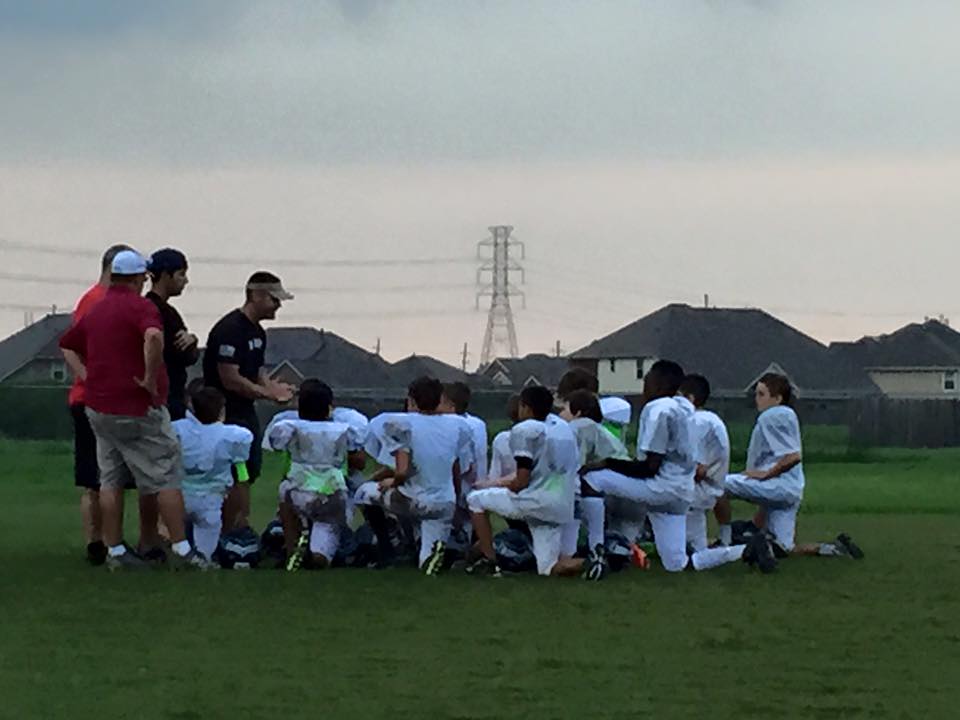
As I reflect on our season, I don’t dwell on the wins or losses, or the touchdowns or tackles; I instead think about the 3 lessons my fellow coaches and I have attempted to instill in each of the young men on our team.
(1) A Simple Motto. We ask our boys numerous times during each practice, “What’s our motto?” They respond at the top of their lungs, “Hard Work.” Their habit of hard work should stretch from the football field, to the classroom, to the doors of their home. We teach them to work hard not for our benefit, but because it gives them both dignity in a job well done today and the tools and character to succeed in the future as adults.
(2) Response-ability: As my good friend and our head coach Mike continually tells our boys, “It’s not if you face obstacles, but when.” Sports provide a great avenue to teach our kids that life is full of obstacles. In light of this, we remind our team of their “response-ability” – translation – they have the ability to choose their response to each situation they face in life. They are not powerless when it comes to their choices. Viktor Frankl, a Holocaust survivor, once wrote, “We who lived in concentration camps can remember the men who walked through the huts comforting others, giving away their last piece of bread. They may have been few in number, but they offer sufficient proof that everything can be taken from a man but one thing: the last of the human freedoms – to choose one’s attitude in any given set of circumstances, to choose one’s response.” It’s important our youth learn this lesson now!
(3) Identity: This is the most important lesson. From the first day of conditioning practices to the team party at the conclusion of the season we tell our boys, “You are loved.” Their identity is in no way tied to their position or performance on the field (for better or worse). For the Christ-following athlete and fan, identity in Christ becomes immeasurably important at this very point. Understanding that in Jesus we are loved unconditionally (Ephesians 1:4–5), forgiven freely (Romans 4:7–8), pursued endlessly (Psalm 23:6), and given meaning and purpose that stretch far beyond the scoreboard (Ephesians 1:5; 2 Timothy 1:9) can free us to rise above the scoreboard in victory and defeat.
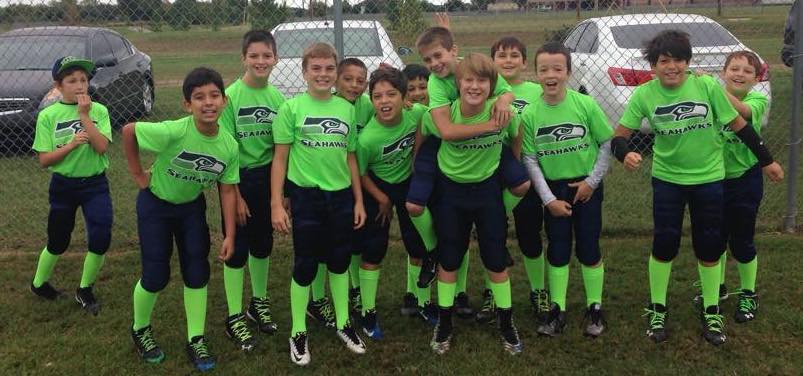 I understand and respect the debate concerning youth sports. There are healthy arguments for and against competition at young ages. But ultimately I believe sports are a gift, a good gift, which God gave through human creativity for our enjoyment. And just like all of life, we ought to approach it with thoughtfulness, discernment, and intentionality.
From the cheerleaders who provide enthusiasm and spirit, to the parents who trust us with their boys, to my fellow coaches who sacrifice so much of their time, and most importantly to the boys we are blessed to lead, I am thankful for football season….and the lessons we all learn.
Conversations With My Grandfather
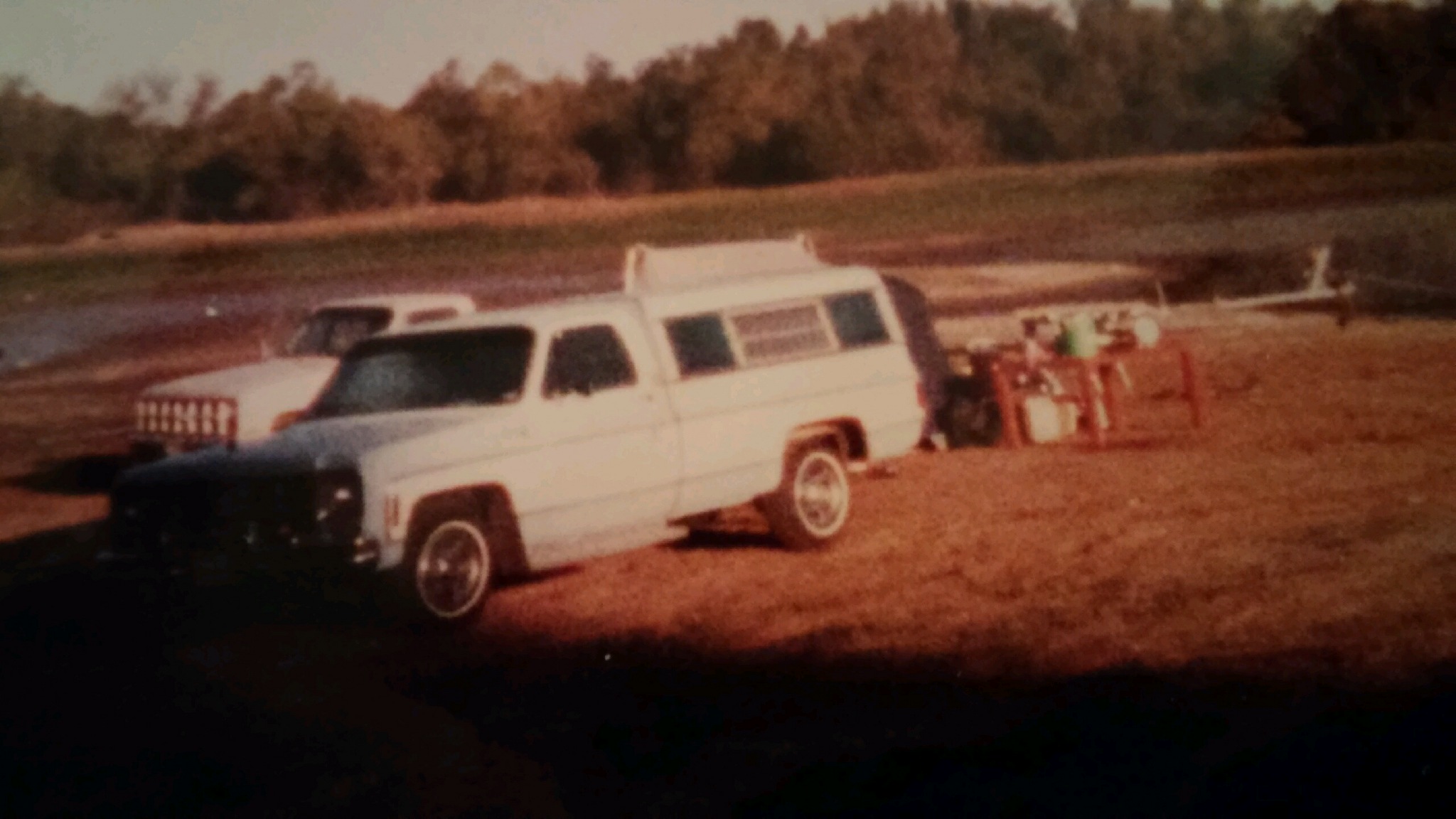 One of my favorite places to be as a kid was in a 1978 Chevy Truck with my Grandfather. It didn’t matter where we were going. Many times we were pulling a boat to the lake. Other times he was dragging my brother and me with him to the railroad yard where he worked. Regardless of where we were going, it was the time in his truck that I remember.
I loved asking him questions. Questions about the Korean War, questions about the country music stars he had played with, questions about faith, questions about life, questions about nothing at all. Without a doubt, these conversations had a profound impact on my life.
Deuteronomy 6 is an oft-quoted passage of many family advocates, and rightly so. Verses six through nine of this dynamic chapter challenge the families of Israel as to how the wonderful book of the law should be used:
“You shall love the Lord your God with all your heart and with all your soul and with all your might. And these words that I command you today shall be on your heart. You shall teach them diligently to your children, and shall talk of them when you sit in your house, and when you walk by the way, and when you lie down, and when you rise. You shall bind them as a sign on your hand, and they shall be as frontlets between your eyes. You shall write them on the doorposts of your house and on your gates.” Deuteronomy 6:4-9, ESV
Did you catch that? Right in the middle of this passage describes “when” we should have these conversations with our kids. “Talk of them when you sit in your house, and when you walk by the way, and when you lie down, and when you rise.” TRANSLATION: During everyday life!
There are things that every one of us do each day of our lives that we can use to teach key life principles to our children. These events move beyond regular family devotions to what many call “devotions in motion.” Even mundane activities like walking the dog, washing dishes, or driving to football practice can be used to share timeless biblical truth and principles….simply by having conversations with our kids.
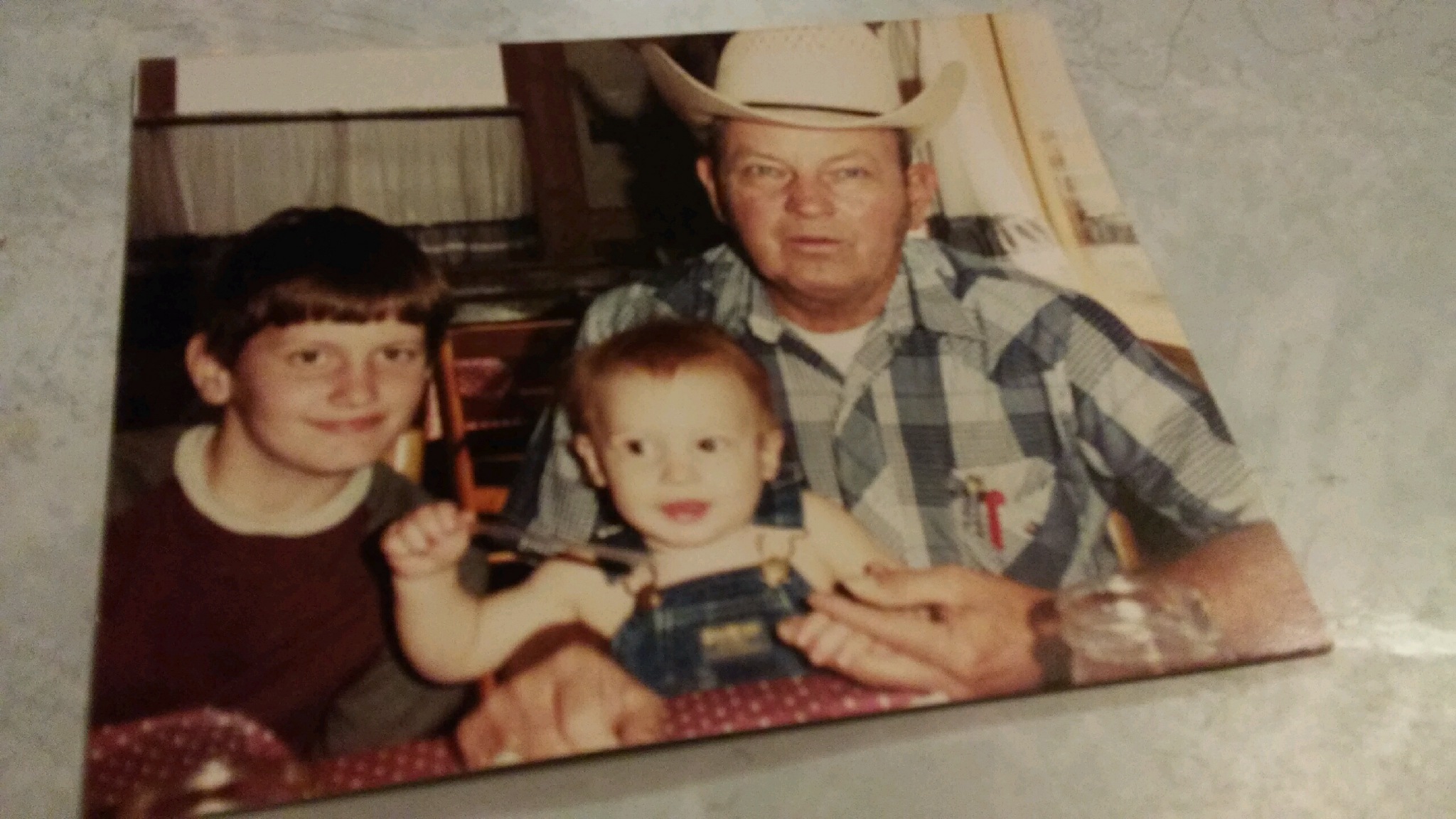
As I further reflect on these conversations, and their role in forming the hearts and minds of my two boys, I cannot help but see the connection with our Heavenly Father. How much more should our conversations with Him mold and shape our hearts ? As we pray and read His Word, He speaks to us. In a sense, He is sharing Himself, His thoughts, His will, and His values with us….a powerful conversation!
As a dad now, I know that the conversations I have with my two sons will have a lasting impact on them as they continue to grow up. They will help shape and mold their hearts and minds, just as the conversations with my Grandfather did for me.
A Terrorist Attack and Trees
Thirty-two years have passed since the largest non-nuclear explosion since World War II took the lives of 220 Marines, 18 sailors and three soldiers. At about 6:20 in the morning on October 23, 1983, a yellow Mercedes truck charged through the barbed-wire fence around the American compound in Beirut and plowed past two guard stations. It drove straight into the barracks and exploded.
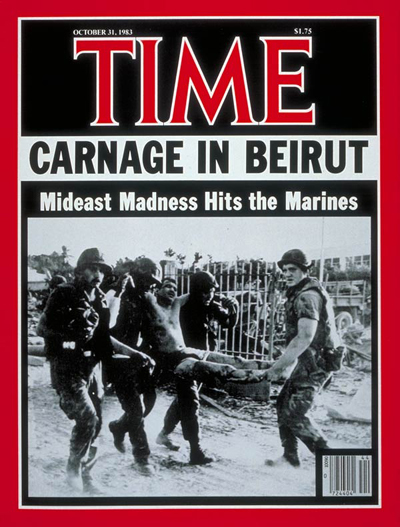
Eyewitnesses said that the force of the blast caused the entire building to float up above the ground for a moment before it pancaked down in a cloud of pulverized concrete and human remains. That day was the largest single-day loss of life of Marines since the Battle of Iwo Jima. It was also the deadliest attack on Americans prior to Sept. 11, 2001.
Americans were shocked at the devastation, but at the time few grasped the significance of the deadly bombing. It marked the emergence of a deadly new form of terrorism never seen on this scale.
Almost all of the 241 deceased service members were from Camp Lejeune, NC. 241 dads, husbands, and friends from one town gone in an instant…the impact was devastating to the small military town of Jacksonville, NC.
 Today, near the entrance to Camp Johnson, a subsidiary base of the Camp Lejeune complex, a memorial wall is nestled among the Carolina pines. The Beirut Memorial Wall, completed on Oct. 23, 1986, bears a list of those Americans who died in Lebanon. Only four words are inscribed on the Wall: “They Came in Peace.”
The Marines lost at Beirut are also remembered in another way. Soon after the attack, a middle school class in Jacksonville decided to raise money for a memorial for the Marines. The money they raised was used to purchase 241 trees.

As you drive down Highway 24 (Lejeune Blvd) into the entrance of Marine Corps Base Camp Lejeune, you may not notice the center lane lined with 241 Bradford Pear Trees, one for each man lost.
What many don’t know is that on the other side of the world there is a matching set of trees. In 1992, the director of the Haifa, Israel USO coordinated the creation of a memorial park that included 241 olive trees. The trees lead to an overpass on Mount Carmel looking toward Beirut.
Col. Charles Dallachie, who was a survivor of the Beirut Bombing once wrote, “For Marines, great victories, great defeats and great sacrifices are never forgotten, but are remembered with battle streamers attached to unit colors. Unfortunately, there are no battle streamers to remember the ultimate sacrifice made in 1983 by Marines, sailors and soldiers in Beirut, Lebanon.”
He is correct, for the Marines lost at Beirut there are no battle streamers..there are only trees.
Leadership Minute: Leaders Eat Last
“Leadership is practiced not so much in words as in attitude and in actions.”
During my career in the Marine Corps, I had the privilege to serve a few tours in the training and education community. The purpose of our job was to screen, train, and evaluate prospective and newly commissioned Marine Officers. While on one of these tours, our command had a group of college educators from the nation’s top universities visit us. Like many other groups before them, the purpose of their visit was to find out what made the Marine Corps’ version of leadership so unique and effective.
After providing a few classes on Marine Corps’ History, Core Values, and Basic Leadership, we would then take them to a “field evolution” to observe training. To put the final touches on Marine leadership, we would typically conclude the day by allowing them to observe the most high speed, intense training event of all……chow time.
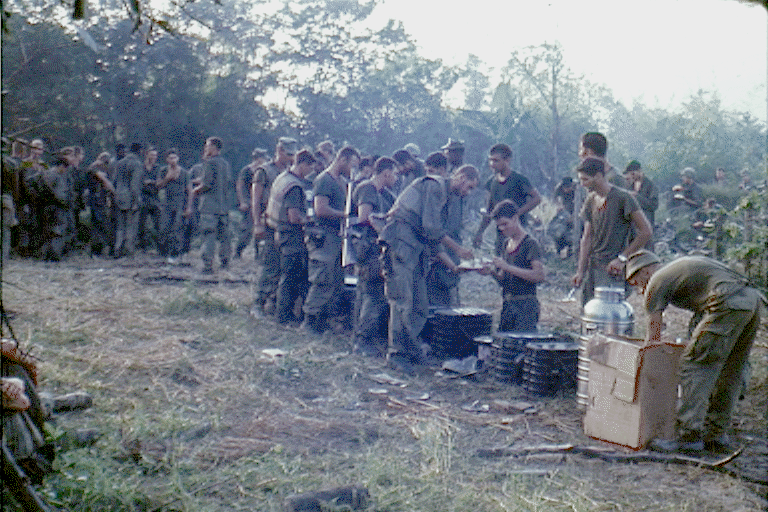
See when you are with Marines gathering to eat, you will notice that the most junior are served first and the most senior are served last. When you witness this act, you will also note that no order is given. Marines just do it.
At the heart of this very simple action is the Marine Corps’ approach to leadership. Marine leaders are expected to eat last because the true price of leadership is the willingness to place the needs of others above your own. Great leaders truly care about those they are privileged to lead and understand that the true cost of leadership comes at the expense of self-interest.
Out of all the leadership training, books, seminars, blogs, etc… available to us today, perhaps the simplest and most easily-actionable idea is to simply take the initiative to take better care of the people on our team.
I learned a lot on leadership from my career in the Marines – one lesson I’ll never forget….Leaders eat last.
The Weight of Expectations
“It’s not the load that breaks you down, it’s how you carry it.”
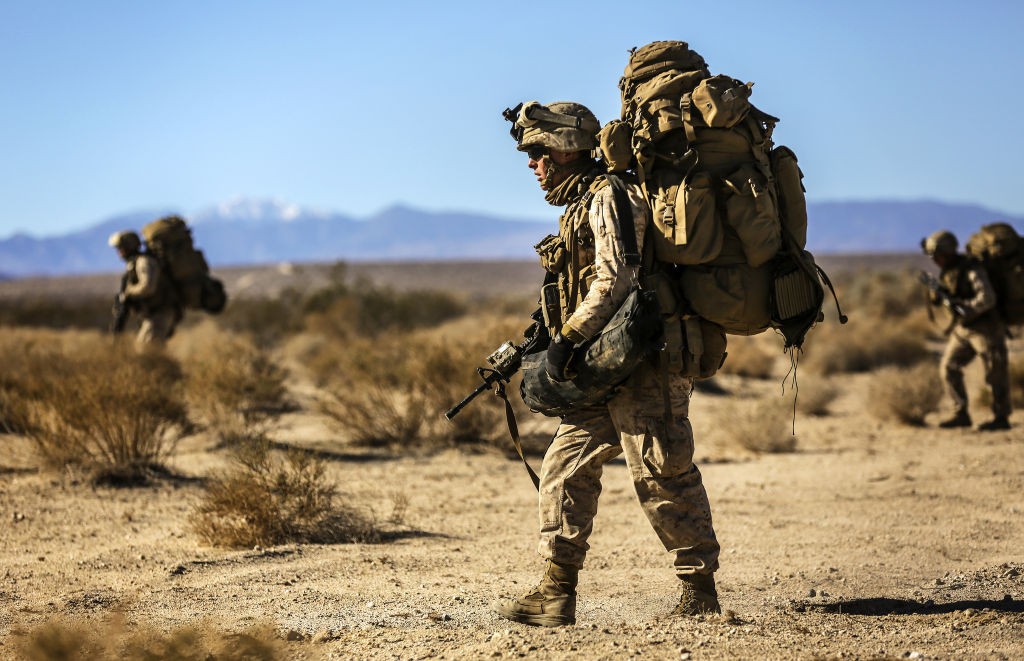 It was summer 1996 and these were the words of my Senior Drill Instructor, Staff Sergeant James Porter. He was demonstrating to my boot camp platoon how to properly carry our Marine Corps “pack” in preparation for the long days of hiking ahead. For our next phase of training, we would spend some time in the mountains and hills over San Diego with more than 80lbs on our back. I watched as those who took his advice and instruction thrived, while those who did not failed.
As a husband, there are many weights in my pack; however experience has taught me that one of these weights is typically larger than the rest: expectations.
These expectations are typically broken down into two parts.
First: what do I expect my wife to do (my expectations)
Second: what does she actually do (her behavior)
In my short 16 years of marriage I have learned this one basic lesson: There is always a gap between expectations and behavior. Maybe this gap is there because of how things were done with my family or how things where done in her family. Maybe this gap is there because of something I have failed to communicate. Regardless of the reason….the gap is there.
But here is the bigger issue – I will typically fill that gap with one of two responses: I can believe the best about her OR I can assume the worst about her.
I want to be clear // what we choose to put in that gap is fundamental to the health of our marriages. Our relationships will grow or fade depending on what we choose to put in that gap.
Stephen Kendrick, author of the best-selling book The Love Dare beautifully states, “Love chooses to believe the best about people. It gives them the benefit of the doubt. It refuses to fill in the unknowns with negative assumptions.” Centuries before Stephen wrote his words, the Apostle Paul in his letter to the Church at Corinth, boldly declared, “Love always protects, always trusts, always hopes, and always perseveres.”
Love demands we fill in the gap by believing the best! When we assume the worst, our pack becomes heavier. Thankfully we can lighten our pack by communicating our expectations and assuming the best! Remember, “It’s not the load that breaks you down, it’s how you carry it.”
Leadership Minute: Picture Perfect Parenting
This morning on the way to work I was listening to a podcast and the following question was asked, “Is your family the picture you had in mind.”
That question got me thinking. Whether we admit it or not, we all hold pictures in our mind of how we think our family should look or how our family should “behave.”
Before I got married and had kids my picture looked like this: Dad’s in charge, we have morning devotions together before our breakfast, relaxing evenings together, we never eat fast food….you know…every morning our children wake up and call their parents blessed.
 Well we soon all come to grips with reality and say, “that’s not us” but we (or maybe it’s just me) still feel an incredible pressure for it to be “us.”
The truth is, there is a degree of dysfunction in every family. After all, a family is merely a gathering of flawed human beings. So don’t buy into the myth that we have to make more lists, get more organized, spend more money, and never make mistakes in order to be successful parents. Unrealistic pictures paralyze parents. Remember….our role as mom or dad is not to impress our children with our ability to parent. Our role is to impress our children with the love and nature of God.
I love the following statement by Reggie Joiner, “The family exists, even in its imperfection, to display the heart of God to every generation.”
Instead of looking at your family and wanting a “Better Picture” – shift your thinking and look at the “Bigger Story.”
Starting Over in Life
“Man must cease attributing his problems to his environment, and learn again to exercise his will – his personal responsibility.” Albert Einstein
 In the past few months I have had the experience to walk with a few friends and family members that were attempting to “Start Over.”
Although each person and situation has been unique, a certain question runs central throughout each of their lives’ story: “How can I ensure the next time won’t be like last time?”
From my own experiences and from walking with others I have learned a few key lessons on “starting over.” The difference between the ones who have made a clean start and the ones that haven’t is the ability to grasp the following lessons (among many others).
#1. The common denominator in all our mistakes is….us. Wherever we go, there we are. Denis Waitley, author and speaker on personal success once stated, “A sign of wisdom and maturity is when you come to terms with the realization that your decisions cause your rewards and consequences. You are responsible for your life, and your ultimate success depends on the choices you make.”
#2. We learn from our mistakes but the majority of the time it is only in the areas that matter least: games, sports, texting, cooking, etc… We repeat our mistakes in areas that matter most: finances, relationships, employment, etc… Just because we “know better” doesn’t mean we will “do better.” It takes self-control and a plan to learn from our mistakes.
#3. Experience does NOT make us wiser. Experience makes you older, poorer, angrier, hurt, tired…it does not make you wiser. Only evaluated experience makes you wiser. The most combat effective units I served with faithfully and ruthlessly conducted after-action discussions. The key to becoming a better fighting force was not simply the experience, but what we learned from the experience and how we could apply that knowledge to future experiences. The same goes with our life experiences.
The key lesson with starting over is there is hope….believe it or not, you are in GOOD COMPANY. Scripture is full of stories about people who were forced to start all over.
Moses: Got in fight, killed a guy, went away, came back, saved Israel.
David: Anointed as king, kicked out, came back, became king.
Paul: Was a Pharisee, wanted to get rid of Christians, blinded by God, came back and served God.
So to answer the question, “How can I ensure the next time won’t be like last time?” – Hit the pause button. Stop the wash-rinse-repeat cycle. Get off the merry-go-round of life. Invite God into your circumstance and let Him help you learn from and take responsibility for your mistakes, clearly evaluate your experiences, and truly start over.
Leadership Minute: 65 Years Ago 1stLt Lopez Reminded Us of This….
On June 25, 1950 the North Korean People’s Army crossed the 38th parallel and pushed relentlessly southward down the peninsula, driving before it the demoralized Republic of Korea Army. With his forces confined to the “Pusan Perimeter” General MacArthur decided to launch a surprise of his own. He organized an audacious amphibious attack with the Army and Marines hundreds of miles behind the communist lines at the coastal town of Inchon. D-Day was set for September 15th. The 230-ship task force was the largest naval armada since World War II. The Marines from the 1st Marine Division would lead the assault.

As briefed, the assault force encountered the 10 foot high sea wall meant to keep them out. In typical Marine fashion, 1stLt Lopez, was the first up and over the wall. Unfortunately, moments after this photo was taken, 1stLt Lopez was hit. He was attacking a North Korean bunker with a grenade….as he raised his arm to throw, machine gun fire ripped through his right arm and chest. The Marine Officer fell backward and the grenade rolled out of his hand. He tried to pick up the grenade but his arm was too badly wounded. In a few precious seconds he knew that the grenade would explode and kill many of his fellow Marines. With a sweep of his wounded arm he pulled the grenade into his chest, wrapped his body around it, and absorbed the full impact of the blast. For his actions above and beyond the call of duty, for sacrificing his own life to protect his men, for sacrificing his life for his country and for freedom, 1stLt Lopez was awarded our nation’s highest honor–the Congressional Medal of Honor.
1stLt Lopez is also remembered every 6 months at the Marine Corps The Basic School (TBS) graduation. The Lieutenant Baldomero Lopez Honor Graduate Award, is presented to the Marine Officer of each graduating company who demonstrates the highest potential for future leadership and responsibility in the Marine Corps.
Thank you 1stLt Lopez for allowing your life to stand as a testimony to the timeless message that leadership requires sacrifice.
Semper Fidelis….
6 Things I (should) Say to My Wife Everyday
A few months ago I wrote a post on the 2 Things I Say to My Kids Everyday. As I was reflecting on that post this morning, I recognized the need to refine and recommit my daily words of affirmation for my wife.
Please note – I am conscious of the imperfections of my efforts in telling her each of these daily – but my motivation is clear – to ensure my bride knows these 6 things truly come from my heart:

I love you. Simple words but powerful. These 3 words imply both my acceptance and my willingness to place her needs ahead of my own. I must never simply assume she knows.
You are beautiful. I have come to realize two things in this area: (1) I have never met a woman who does not enjoy being told she is beautiful and (2) Most women don’t think they are as beautiful as they really are. My shouts declaring her beauty should drown out any doubts she may have.
I pray for you. What better way to make my wife feel loved and protected than by laying down my prayer life for her. Even better, the more I understand how my wife benefits directly from my prayers for her, the more I understand how God uses those prayers to build my own faith.
You are my desire. The world bombards my wife and I both with images of a false, unrealistic idea of what sensuality and intimacy are. I should remind her daily that she fulfills all my desires….no fantasy could ever compete with what we have!
I value our partnership. I have many advisors, mentors, and friends…..still my most trusted source for wisdom, guidance, and honest feedback is my bride. She has seen me at my best and my worst. Our individual futures and our individual purposes are intertwined as one. I would want no one else to walk thru this life with.
Thank you. For the big things and the small things. For walking beside me. For being my biggest fan. There are too many things to list (many I never see) but I must continually tell her thank you. She deserves my gratitude.
What about you? Do you have daily words for your spouse? If not, develop them.
Do this every day; make them real, make them count.
A 1st Grader’s Letter of Hope
During my final deployment to Iraq in 2009-2010, I was stationed at Al Asad in the Western Anbar Province. During this 13 month deployment it was common for my unit to receive care packages from elementary schools, churches, and community organizations showing their support to the troops.
 One day in October we received another shipment containing letters of support. As my letter (addressed to “Any Marine”) was passed to me, I placed it in my pocket to read at a more convenient time. Later that evening I retrieved the letter from my pocket and honestly laughed out loud when I read it. It was penned by a 1st grader from Oregon. The young man had drawn a picture of a tank with an American Flag in the background. This boy must have been a child of few words, because across the top of the letter was his 5-word message to me (written in alternating red and blue letters). It simply read, “I hope you make it.”
After sharing this kid’s motivating remarks with a few of my Marines, I honestly thought…I hope I make it too!
What’s interesting about the word hope is that for many it is used to express uncertainty rather than certainty…almost like a wish. For example: “I hope the Cowboys make the playoffs,” or “I hope we have something good for dinner tonight.” Uncertainty is clearly tied to this type of hope.
Conversely, that’s absolutely not what is meant by Christian hope. To quote John Piper, “As believers, our hope comes from the promises of God rooted in the work of Christ.”
If we don’t have the hope that Christ is for us, then we will be engaged in self-preservation and self-enhancement. We will cross our fingers and rely on our strong desires and wishes. We could even perhaps decide, by sheer strength and will-power, to be positive thinkers and thus make the best of our brief and uncertain lives. There is no hope in this type of existence.
So let’s look away from the circumstances that confront us, look to Christ, look to the promises, and hold fast to them. Simply put…our hope is faith in the future tense.
What or who is your hope and faith in?
 Brad Flurry