leadership
Leadership Minute: Rate Your Boss as a Leader
Today’s Leadership Minute comes from Clarke Price, former President, Ohio Society of CPAs and a Founder of the Ross Leadership Institute.
 In his classic 1970 book, Up the Organization, Robert Townsend proposed a way to rate your boss as a leader:
Score each characteristic from 0 to 10
My Leader is:
1.. . . . available. If I have a problem I can’t solve, he is there. But he is forceful in making me do my best to bring in solutions, not problems.
2.. . . . inclusive. Quick to let me in on information or people who might be useful to or of long-term professional interest.
3.. . . . humorous. Has a full measure of the Comic Spirit in his make-up. Laughs even harder when the joke’s on him.
4.. . . . fair. And is concerned about me and how I am doing. Gives credit where credit is due, but holds me to my promise.
5.. . . . decisive, Determined to get at those little unimportant decisions which can tie up organizations for days.
6.. . . . humble. Admits his own mistakes openly – learns from them and expects his people to do the same.
7.. . . . objective. Knows the apparently important from the truly important and goes where he is needed.
8.. . . . tough. Won’t let outsiders waste his time or his people’s time. Is more jealous of his people’s time than he is of his own.
9.. . . . effective. Teaches me to bring him my mistakes with what I have learned (if anything) and done about them (if anything). Teaches me not to interrupt him with possible good news on which no action is needed.
10.. . . . patient. Knows when to bite the bullet until I solve my own problem.
Total __________ This is your leader’s rating as a leader on a scale of 0 to 100.
How would your team rate you?
Leadership Minute: 3 Ways to Make Your Vision Contagious
“The only thing worse than being blind is having sight but no vision.” – Helen Keller

People not only follow a person….but a vision as well. The importance of having a vision is even noted as far back as 1000 BC by King Solomon in his book of Proverbs, “Where there is no vision, the people perish.” (Proverbs 29:18).
Visionaries dare to dream. They peer into the future and generate possibilities in their mind’s eye…this is the essence of vision!!
The legendary sculptor, Michelangelo claimed that as he looked into the stone, “I saw the angel in the marble and carved until I set him free.” His vision had already created his masterpieces before his hands did the work.
On the other hand, we have all witnessed a leader present a magical power point presentation, or company memo, detailing his or her new vision for the organization only to see it slowly fade away. These leaders claim to have a vision, but they can never move themselves or others toward it. As a consequence, their vision sits on the shelf until it spoils, or until someone else takes initiative to claim it.
So why does this leader’s vision fail? What makes one leader’s vision powerful and another’s so weak. One word – contagious. In order for one’s vision to be powerful it must be contagious!
How do you make your vision contagious?
#1: By ensuring your vision is clear, challenging, and relevant. Vision provides clarity, not confusion. As John Maxwell says, “vague visions cannot serve as compelling guides.” Followers do not rally behind a leader’s fuzzy picture of the future. Rather, they are attracted and motivated by leaders who can paint an instantly recognizable portrait of tomorrow.
#2: By living it out. The key leaders within the organization must be the first to truly and fully participate in the vision. They have to let others see and feel their personal passion for the vision through their own participation. Simply put…the leader is the steward of the vision he casts.
#3: By continually casting the vision. To paraphrase Andy Stanley: You can’t just cast it once. You must cast it continuously and convincingly. You most work to ensure everyone on your team knows they also have a responsibility to cast and carry the vision. Your team’s mindset should be: “If we don’t do it, it won’t get done.”
Is your vision contagious? More importantly, do you even have a vision? As Theodore Hesburgh, President Emeritus of the University of Notre Dame stated, “The very essence of leadership is that you have a vision.”
Baseball and Leadership Development
One of the highlights of summer in my house is the Little League World Series. My boys love watching kids their age play one of the sports they love. They especially enjoy the introduction of each player. In front of a national TV audience, the young baseball players have a chance to state their name and their favorite player. I was amazed at how many kids stated Derek Jeter (who retired at the end of last season) as their baseball hero.
 I am not a huge Yankees fan, however I can respect the legacy of success and hard work that Jeter is leaving behind. During one of the commercial breaks, my youngest son asked me, “How did they find someone to take his place?” In a simple way I attempted to explain the MLB’s farm system. I shared how teams use the minor leagues to develop talent and produce a new crop of young players.
My oldest son, more savvy to sports, then mentioned how teams also “buy” talent through free agency. This is also true. Some teams, instead of developing their own talent, pay big money and sign a free agent from another team.
What about you….do you have a minor league leadership development system or do you depend on free agency?
As a leader within your organization ask yourself the following questions:
· Are there stars on my team nearing the end of their service?
· Who are the rising stars on my team?
· Do I have an intentional, programmed leadership development plan for my team?
· If one of my team members were absent for an extended period of time (similar to the D.L. in sports) have I identified talent to fill the hole or would I need to go the free agency route and hire someone new?
Remember…free agency is not necessarily bad. If you develop the talent on your team well, another organization may come calling for one of your team members. When they do, you’ll ensure that person is supported and equipped to go. You’ll then go to your bull pen and call up your next rising star!
Leadership Minute: Leadership Isn’t Convenient
Leadership Minute….a quick read to provide my thoughts on certain aspects of leadership. I welcome your feedback!

A great friend and mentor of mine lived and preached two great philosophies concerning leadership:
#1: Leadership is a Contact Sport
#2: Leadership Isn’t Convenient
Let’s hit #2 today.
How much of your day is spent answering questions or problem solving with members of your team? When they walk away, did they leave with answers, guidance, and clarity?
Today’s pace and demand in the work place can challenge even the best time-management expert; however it is important to pause and listen to members of your team. They are not an interruption, they are an obligation. Remember…..you’re the leader.
A few years ago I read the biography of former Army General and Sec. of State Colin Powell. He made a simple yet powerful observation, “The day your soldiers stop brining you their problems is the day you stopped leading them. They have either lost confidence that you can actually help or concluded that you do not care. Either case is a leadership failure.”
Ask yourself today, “Do I provide leadership when it is convenient – or when it is needed?”
Call of Duty: A Message to Dads
“Duty is the sublimest word in our language. … You cannot do more. You should never wish to do less.” General Robert E. Lee
On June 15th 1775, George Washington accepted an assignment to lead the Continental Army. Washington had been managing his family’s plantation and serving in the Virginia House of Burgesses when the second Continental Congress unanimously voted to have him lead the revolutionary army.
After accepting the position, Washington sat down and wrote a letter to his wife, Martha, in which he revealed his concerns about his new role. He expressed uneasiness and worry at leaving her alone. He shared with her that he had updated his will and hoped that he would be home by the fall. Washington’s call to duty would not allow him to return “home” for almost 6 years.
 As I ponder Washington’s life and his call to duty, I reflect on the lessons I have learned during my time as a Marine. I’ve learned that men will work hard for promotions. I’ve learned that they will work even harder for a great leader. But I’ve also learned that men will work hardest of all when they are dedicated to a calling…when they are dedicated to their duty.
Gentlemen – as fathers – we have an enormous but beautiful duty to shoulder. Our duty: training and equipping our children to live out their lives for the Gospel.
This Father’s Day, I challenge every man to do his duty to those who are in his care and toward whatever task is in his trust, regardless of the personal cost. I pause, myself, to reflect upon ways in which I can serve my family better. I fear I may one day wish I had done more than I did. Let us have no regrets!
Duty recognizes a cause greater than one’s self; it is choosing the right thing rather than the convenient thing. When your duty as a dad calls, how will you answer?
My Son’s First Date
In mid-August 2010, at the ripe old age of 5, my oldest son went on his first date. He approached me about a week prior and told me of his intentions. I agreed but offered a few simple rules for him to follow:
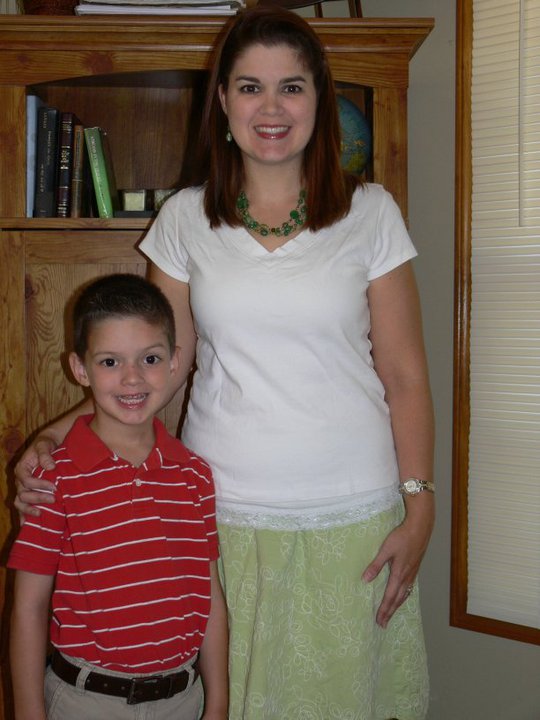 #1. Be a gentle-man. Open the door. Give sincere compliments. Have good table manners. Always be characterized by the needs of others before your own.
#2. Make eye contact and listen. Show her she is important by paying attention to her. Truly listening to her shows respect.
#3. Pick up the check. The guy doesn’t always have to pay for everything; however on the first date he should. Not only is this polite it also sets the tone for his understanding of his future role as provider. (Disclaimer: Due to strict child labor laws, Hunter was limited on his ability to generate any income so I spotted him a few bucks. Liz also had to help him figure out the tip but overall he did a good job.)
As our boys mature, Liz and I will have additional conversations with them about boundaries (physical and emotional), about leadership and intentions, and plenty about respect and purity. More important than all these conversations is the example that I provide. How I treat their Mom will set the tone for how they view women. Through my words and actions, for better or worse, I will teach them what respectful behavior is.
One day each of my boys will fall in love with a beautiful young lady and begin an exciting new chapter in their book of life; however Chapter One will be always be dedicated to the first girl they ever loved…their Mom.
My Grandmother and a Delta Force Commander
In his best-selling book, The Mission, the Men, and Me, Pete Blaber, a former Delta Force Commander, describes his 3M thought process and priorities when confronted with a different or complex situation.
He describes the first (M) as the mission. This is your organization’s purpose for existing. It should guide everyone’s actions, decisions, and convictions.
The second (M) is the men. These are the individuals in your organization who will bear upon their shoulders the responsibility of accomplishing the unit’s mission. You must lead them but you must also listen to them. More importantly, as Blaber makes clear, the most important way you can take care of your people is by having the moral courage to do what is right by them.
The last (M) is me. The final (M) comes last for a reason. A true leader will always put his/her organization’s mission and people before their own well-being or advancement. As Blaber states, “you have to take care of yourself, BUT only after you have taken care of the mission and the men.”
Although Blaber’s leadership priorities are founded and practiced in a military environment, I believe these principles can also be applied to leadership outside of the military as well. In fact, I witnessed this style of leadership long before I ever joined the military…..from my Grandmother.
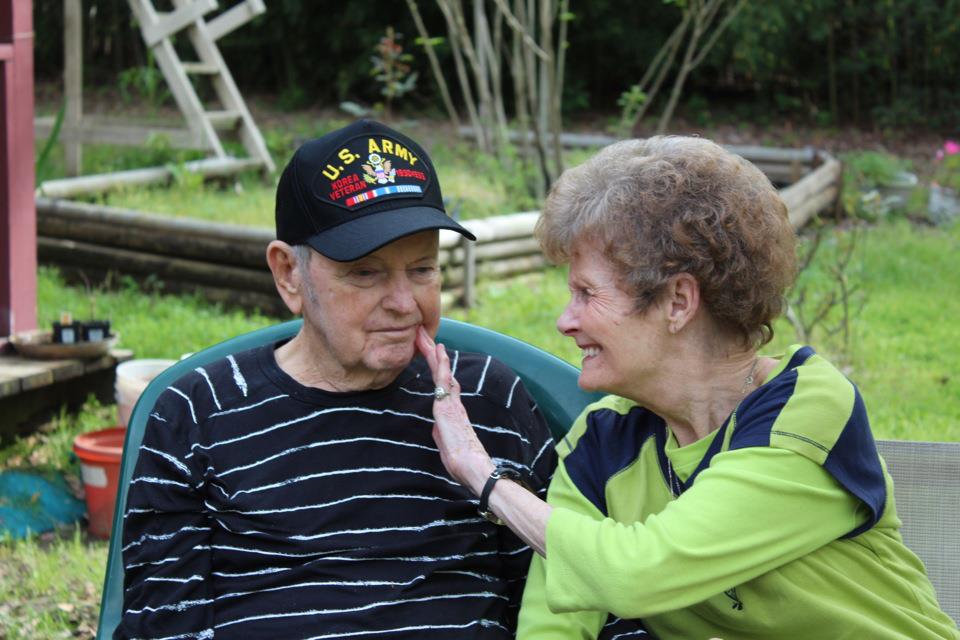 A blog post would not do justice to the life of selfless service my Grandmother has demonstrated. Under the roof of her home, she has raised 4 daughters, multiple grandchildren, and currently even a great-grandchild. After a stroke took the mind and part of the body of my Grandfather, I watched as she cared for him with the same love and commitment as newlyweds.
What do my Grandmother and a Delta Force Commander have in common? A leadership style based upon the shared experiences of sacrifice. A life of putting the goals of the organization or family first.
What about you? If one was to assess the priorities of your leadership would it truly be:
- The mission
- The men
- Then me
We All Have Super Powers: Part Three
This is the last in a series of three posts on the different types of super powers we all have.
I previously provided my thoughts on the power of our words and the power of our example. However this super power may be the most influential:
Super Power #3: The Power of Your Legacy
What is the best funeral you have ever been to?
Crazy question huh? I thought about this question a few weeks ago while listening to a sermon by our Missions Pastor, Omar Garcia (gobeyondblog.com).
Unfortunately I have been to a decent amount of funerals and military memorial services. Although each of these services involve mourning, there are some that are profoundly celebratory. What makes these services different than the others? It’s the legacy left behind.
Birth of a Legacy: During a long nighttime stakeout in the spring of 1980, U.S. Customs Agent Tommy Austin tells Arizona Department of Public Safety Officer Ron Cox his problem.
 His wife’s friend has a small son named Chris who is probably going to die of leukemia. The seven-year-old boy dreams of becoming a police officer. Running into bureaucratic hesitation at Customs, Austin asks Cox if maybe DPS can do something.
Together they enlist the help of others who hear about Chris’ story. They arrange for Chris to spend a day as an honorary DPS Officer. He rides on a police motor cycle and patrol car and even flies in a DPS helicopter. Four days later, the young boy passes away.
As Cox and Austin leave the hospital that sad day, they discuss in awe how so many people stepped up to grant this young boy his final wish. They wonder if they could do the same for other kids with terminal illnesses. From their desire to serve others the Make-A-Wish Foundation was born. Today this foundation grants a wish to a sick child every 38 minutes. For these men, their legacy of service will inspire others for generations.
For better or for worse, we will all leave a legacy. This legacy will be much more than the words in our obituary. It will be defined by the impact we have on the lives of others. Our Creator has handed us a portfolio of valuable gifts. Do we use them for self-fulfillment or self-sacrifice?
In the Sermon on the Mount, Jesus encourages us to seek first His kingdom. What do you seek first? The answer to this question will determine your legacy.
We All Have Super Powers: Part One
This is the first in a series of three posts on the different types of super powers we all have. My definition of a super power: the ability to shape the life of others….for better or worse.

This past Memorial Day weekend my family got to spend time with some of our best friends. Between our 2 families we had 6 kids under the age of 10 running around our home. A portion of our time together was spent creating new super hero names for each kid and identifying their corresponding super powers. When I watched our children imagine different types of creative superpowers, I think about how we as adults fail to realize the powers we can actually yield….the powers to shape the life of others….for better or for worse.
Super Power #1: The Power of Words
“Kind words can be short and easy to speak, but their echoes are truly endless.” – Mother Teresa
As children we all heard the rhetoric, “Sticks and stones may break my bones, but words can never hurt me.” Really? Let’s not kid ourselves. Words are potent. They can build and they can destroy. I once read that a word is like a living organism, capable of growing, changing, spreading, and influencing your family, team, or organization in many ways, directly and indirectly.
 Many years ago as a young platoon commander, I worked with a Marine originally from India. He and his family moved to the U.S. at an early age and he decided as a junior in high school to serve his country. During one of our many conversations about his childhood in India, he shared with me a Hindu word, “Genshai” – his translation – never treat others in a way to make them feel small.
Our discussion reminded me that the importance and power of one’s words is noticed across all cultures. Coming from one’s parent, spouse, friend, or leader, a positive word provides inspiration. It builds confidence, initiative, and trust. Most importantly it builds courage. Courage to do what’s right. Courage to try new ideas. Courage to make your family, team, or organization better!!
As a spouse, parent, or leader, how are you leveraging the power of your words?
I offer the following three daily challenges to you (think Public, Private, Protect):
(1) Public: Publicly speak a work of encouragement / praise to one of your family or team members in front of others.
(2) Private: Privately drop an email or note to one of your people thanking them for their hard work and encouraging them in their efforts.
(3) Protect: Protect your family and your team from the damage that your words may cause…..hold your tongue when angry, frustrated, or tired….you’ll never regret it.
Like all super powers, the power in your words can build or destroy. Use them wisely!
2 Things I Say To My Kids Everyday
A few days ago I read an article titled “10 Things to Say to Your Kids Everyday.”
It was a well written article with a positive, encouraging message.
Like the author of the article, I believe in providing my boys with a positive message each day. However when it comes to what they remember me saying each day I hope they will know in their heart two things…..two really important things.
#1: “I Choose You”
Our daily exchange, typically at night, goes like this:
Me: “Drew, if I had every 8 year old boy in the world lined up, who would I choose to be my son?”
Drew: “You would choose me!”
The purpose of this conversation is to ensure they undoubtedly know they are chosen, loved, and accepted.
Greater than ever before, our culture has created a need for acceptance. As my boys grow older and head out in to this world, I want them to always know they are chosen and accepted by those who love them most.

#2 : “You Are My Son”
Our conversation goes like this:
Me: “Hunter, why do I love you?”
Hunter: “Because I am your son.”
As their Dad, one of my most important duties is to ensure they undoubtedly know that their Mom & Dad’s love is in no way tied to performance….performance in a class room, performance on a ball field, performance in life. I love them simply because they are my sons.
Why do I have these two specific conversations with my boys each day?
Because as a child of God, I do not have to compete with others for His love.
Because as a child of God, my identity in Christ is never tied to my own performance.
Because as a parent, it is my responsibility to reflect the image of God in my home.
If you have children, develop your own messages. Speak truth into their life.
Do this every day; and make them count.
- ← Previous
- 1
- 2
- 3
- Next →
 Brad Flurry